

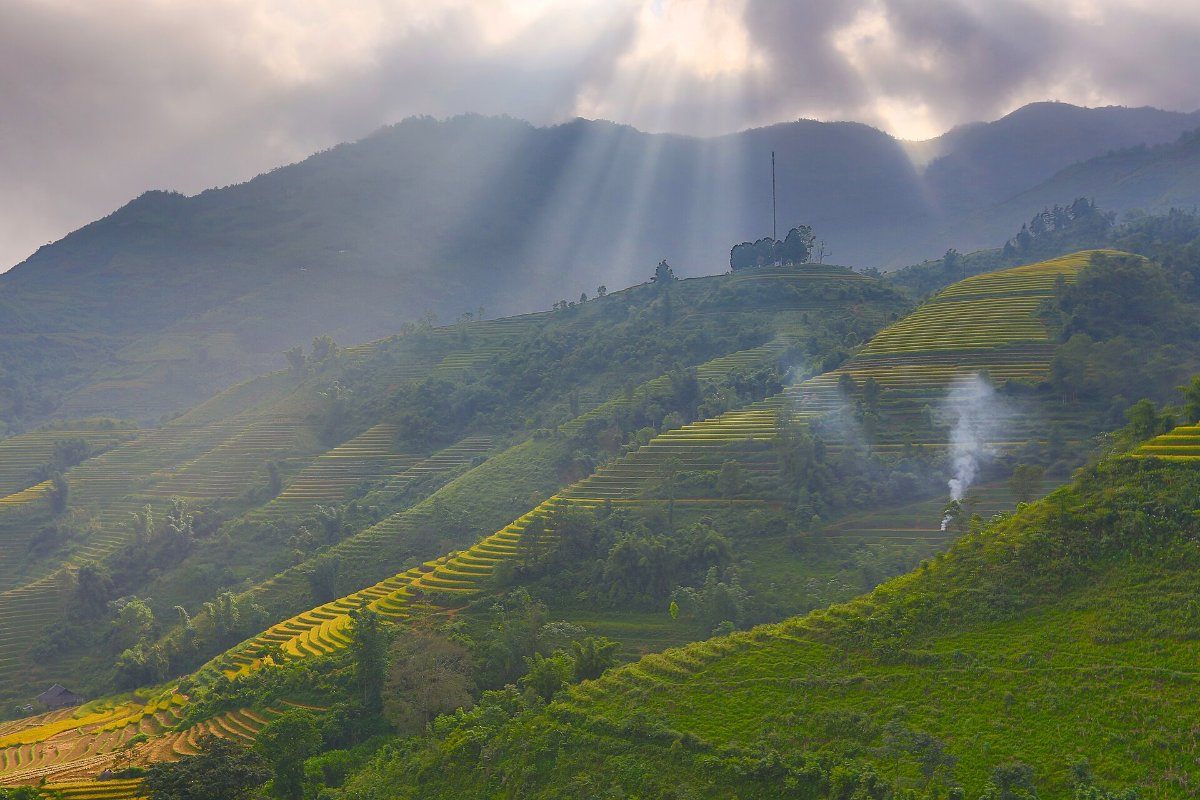
Sapa Travel Guide: Trekking, Rice Terraces and Hill Tribe Villages
Sapa Travel Guide: Trekking, Rice Terraces and Hill Tribe Villages
Sapa is a former French hill station in the Hoang Lien Son mountains of northwest Vietnam, close to the Chinese border. It is famous for its sweeping rice terraces, cool mountain air and the villages of the Hmong, Red Dao, Tay and Giay people who have farmed these valleys for generations. For many travelers, a few days walking through the terraces with a local guide is the most memorable part of a trip to northern Vietnam. This guide covers the best treks, where to stay, when to go and how to fit Sapa into your itinerary.
At a glance
Best time
March–May and September–early October
How long
2–4 nights
Getting there
5–6 hours by road from Hanoi, or overnight train to Lao Cai
Ideal for
Trekking, ethnic culture and photography
How many days do you need in Sapa?
Two nights is the minimum to enjoy a full day of trekking without rushing. Three or four nights let you combine a longer trek, a homestay in a village, the cable car to Fansipan and a visit to one of the colorful weekly markets in the surrounding districts.

How to get to Sapa from Hanoi
- By road: the Hanoi–Lao Cai expressway brings Sapa within about five to six hours of Hanoi by private car or limousine bus. This is now the most popular option.
- By overnight train: trains run from Hanoi to Lao Cai in about eight hours, with private sleeper cabins on some carriages. From Lao Cai it is about an hour by road up to Sapa.
Sapa combines easily with Halong Bay: return to Hanoi and continue to the coast the next day.

The best treks around Sapa
Lao Chai and Ta Van
The classic trek follows the Muong Hoa valley, descending from Sapa town through terraced fields to the Black Hmong village of Lao Chai and the Giay village of Ta Van. The walk takes about four to five hours and suits most reasonably fit travelers. Many people stay overnight in a Ta Van homestay.

Ta Phin
Ta Phin is home to Red Dao families known for their herbal baths and embroidery. The route crosses quieter hills and can be combined with a visit to an old French monastery.
Ta Giang Phinh and longer routes
For more remote scenery, walk to Ta Giang Phinh, Hau Thao or Sin Chai, where you will see fewer visitors and more traditional village life. Your guide can tailor the distance and difficulty to your fitness.
Cat Cat village
A short walk from town, Cat Cat has a waterfall, craft demonstrations and paved paths. It is more developed than other villages but a good option if you only have a few hours or are traveling with young children.
Fansipan, the roof of Indochina
At 3,143 meters, Fansipan is the highest mountain in Vietnam, Laos and Cambodia. A modern cable car takes you close to the summit in about 15 minutes, followed by a short climb of stairs to the top, where temples and pagodas have been built. On a clear day the views are spectacular; go early in the morning, as clouds often gather later. Experienced hikers can climb the mountain on a one- or two-day trek with a licensed guide.

Markets and culture
The weekly markets of Bac Ha (Sunday), Can Cau (Saturday) and Coc Ly (Tuesday) are among the most colorful in Vietnam, where Flower Hmong families in bright costumes trade buffaloes, horses, vegetables and textiles. Visiting one requires a drive of two to three hours from Sapa, so plan your dates around market days. In the villages, you can learn about indigo dyeing, batik and the hemp weaving that Hmong women still practice.

Best time to visit Sapa
- March to May: mild weather and the planting season, with water reflecting in the terraces.
- June to August: the terraces are bright green; afternoon showers are common.
- September to early October: golden rice and the harvest – the most photogenic time.
- November to February: cold, often misty, with occasional frost; good for quiet trekking if you pack warm clothes.
See our best time to visit Vietnam guide for the whole country.

Where to stay in Sapa
Sapa town has hotels for every budget, including a few luxury properties with valley views. For a quieter experience, choose an eco-lodge in the Muong Hoa valley or a family homestay in Ta Van or Ta Phin, where you share meals with your hosts. Homestays are simple, with mattresses on the floor and shared bathrooms, but many travelers find them a highlight.

What to pack
- Comfortable walking shoes with good grip – paths can be muddy.
- A light rain jacket all year and warm layers from November to March.
- Sun protection, insect repellent and a small backpack.
- Small notes for buying handicrafts directly from the makers.
Sapa or Ha Giang?
Sapa is easier to reach and better for trekking, while Ha Giang is wilder and best explored by road. Read Sapa vs Ha Giang and our Ha Giang Loop guide to decide.

Tours that include Sapa
Hanoi, Sapa and Halong Bay Tour: 7 Days in North Vietnam7 days · Private tour · View itinerary → Vietnam Itinerary 14 Days: Sapa to the Mekong Delta14 days · Private tour · View itinerary →
 Best of Vietnam in 10 Days10 days · Private tour · View itinerary →
 Northwest Vietnam Loop: 7 Days via Moc Chau, Dien Bien Phu and Sapa7 days · Private tour · View itinerary →
Frequently asked questions
Is Sapa worth visiting?
Yes. The rice terraces and village life are unique, and trekking with a local guide gives you a real insight into the cultures of northern Vietnam.
How difficult is trekking in Sapa?
Most treks are easy to moderate, with some steep and slippery sections. Routes can be adapted for all fitness levels, and a car can meet you at the end.
Can I visit Sapa with children?
Yes. Choose short walks such as Cat Cat or Lao Chai, the Fansipan cable car and a comfortable hotel or lodge.
How do you get from Hanoi to Sapa?
By expressway in about five to six hours by car or bus, or by overnight train to Lao Cai followed by a one-hour drive.
What is the best time to visit Sapa?
September to November and March to May for clear views. The rice terraces are green from June to August and golden in September.
Plan your private trip with Entdecke Vietnam
Tell us your dates, interests and travel style, and our local team will suggest a private itinerary for you.
Request a quoteRelated guides
Cover photo: Phi Phi Hoang, CC BY 2.0, via Wikimedia Commons.