

Hoi An and Da Nang Food Guide: What to Eat in Central Vietnam
Hoi An and Da Nang Food Guide: What to Eat in Central Vietnam
Central Vietnam is where many travelers fall in love with Vietnamese food. The old Quang Nam province around Hoi An and the city of Da Nang share a cooking tradition that is simpler and more rustic than the refined imperial cuisine of nearby Hue, yet full of character: fresh herbs from Tra Que village, noodles made with local well water, grilled pork wrapped in rice paper and seafood landed on the beach each morning. This guide covers the dishes worth seeking out, where to eat them and how to fit a food-focused stay into a wider trip through Vietnam.
At a glance
Must-try dishes
Cao lau, mi Quang, banh mi, white rose dumplings
Where to eat
Hoi An Central Market, night markets, beach seafood
Best experience
A cooking class with a market visit
Best time
February–August
Why Hoi An and Da Nang are a food lover's base
The two cities sit only 30–45 minutes apart by road, so most visitors stay in one and eat their way through both. Hoi An is compact and walkable, with market stalls, family-run eateries and cooking schools in and around the Ancient Town. Da Nang is a modern beach city where locals eat out at plastic tables along the river and the seafront, and where prices are often lower than in Hoi An. Together they give you street food, seafood and countryside cooking within a short drive.

Dishes you should not miss
Cao lau
Hoi An's signature dish: chewy, slightly yellow noodles served with slices of pork, crunchy rice-cracker croutons, fresh greens and just a little rich broth at the bottom of the bowl. The texture of the noodles is what makes it unusual, and it is hard to find a true version outside the town.

Mi Quang
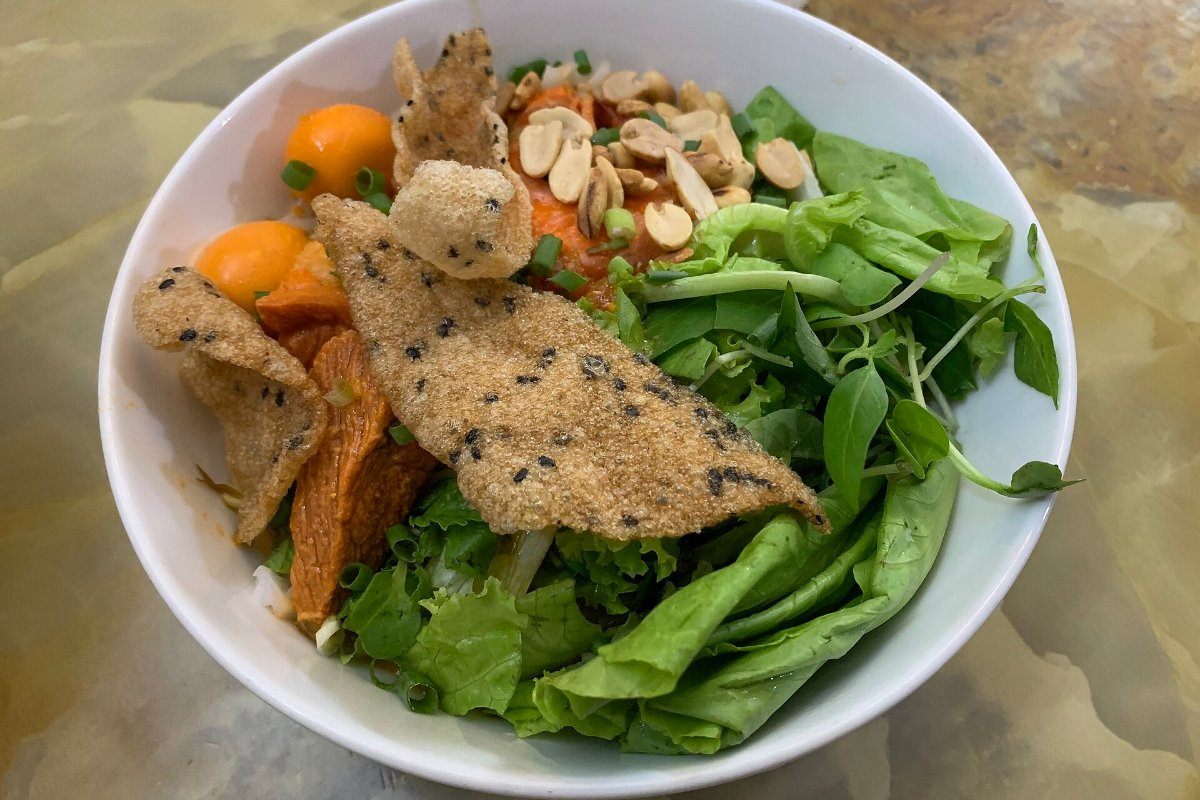
The defining noodle dish of the whole Quang region. Wide turmeric-tinted rice noodles are topped with pork, shrimp, chicken or fish, a small amount of intensely flavoured broth, peanuts, herbs and a sesame rice cracker that you break over the top. Every family has its own version, and locals eat it for breakfast as often as for lunch.
Banh mi
Hoi An has a strong claim to the best banh mi in Vietnam. A crisp baguette is filled with pâté, cold cuts or grilled pork, pickles, herbs, chilli and a house sauce. A couple of shops in the Ancient Town have become famous with travelers, but small stalls around the market are just as good and the queues are shorter.
Com ga Hoi An (Hoi An chicken rice)
Rice cooked in chicken stock with a touch of turmeric, topped with shredded poached chicken, onion, herbs and a side of papaya salad and broth. It is light, comforting and a good choice on a hot day.

White rose dumplings
Delicate translucent dumplings filled with shrimp and shaped like small flowers, topped with crispy shallots and served with a sweet-sour dipping sauce. They are made by only a few families in Hoi An and supplied to restaurants across town.
Banh xeo and nem lui
Crispy rice-flour pancakes filled with shrimp, pork and bean sprouts, and lemongrass pork skewers grilled over charcoal. You wrap both in rice paper with herbs and dip them in a thick peanut and liver sauce. This is a hands-on, sociable meal that works well for families.
Banh trang cuon thit heo
A Da Nang favorite: thin slices of boiled pork rolled at the table in rice paper with cucumber, green banana, herbs and lettuce, dipped in fermented anchovy sauce (mam nem). The sauce has a strong flavor; ask for a milder dipping sauce if you prefer.
Bun cha ca
Da Nang's fish-cake noodle soup has a clear, slightly sweet broth made with fish bones and pumpkin, rice vermicelli and slices of fried fish cake. It is a typical local breakfast and very different from Hanoi's grilled-pork bun cha.
Seafood on the beach
Along My Khe and Son Tra in Da Nang, and at An Bang and Cua Dai near Hoi An, seafood restaurants display live clams, prawns, crabs and fish in tanks. You choose, it is weighed, and you agree on the cooking style: grilled with salt and chilli, steamed with lemongrass or stir-fried with tamarind. Always confirm the price per kilogram before ordering.
Sweet treats and drinks
Try che (sweet soups with beans, jelly and coconut milk), banh it la gai (sticky rice cakes wrapped in leaves) and fresh sugarcane juice. Vietnamese coffee is everywhere, from strong drip coffee with condensed milk to coconut coffee and egg coffee in tourist cafés.

Where to eat
- Hoi An Central Market: the food hall at the back of the market serves cao lau, mi Quang and com ga at simple stalls. Go before midday when everything is fresh.
- Hoi An Night Market (An Hoi): grilled skewers, banh xeo and sweets in the evening, with lantern-lit views of the Thu Bon River.
- Han Market and Con Market, Da Nang: local markets with many food stalls and good prices.
- Beachfront seafood, Da Nang: the stretch along My Khe and towards Son Tra is lined with seafood restaurants that fill up after sunset.
- Tra Que village: an organic herb village between Hoi An and the beach, where you can join farmers in the garden and then cook with what you picked.

Cooking classes and food tours
A cooking class is one of the most rewarding things to do in Hoi An. A typical class begins with a market visit or a basket-boat ride through the coconut palms, followed by hands-on cooking of three or four dishes such as banh xeo, fresh spring rolls and mi Quang, and finishes with lunch. An evening street-food walk with a local guide is a good alternative if you want to try many small dishes in one go. Both are easy to add to any private itinerary.

Practical tips for eating well
- Follow the locals: busy stalls with fast turnover usually mean fresh food.
- Herbs and ice: in Hoi An and Da Nang, ice in restaurants and cafés is generally made from purified water. If you have a sensitive stomach, start slowly and choose cooked dishes for the first days.
- Vegetarian options: look for "chay" on menus; Hoi An has several good vegetarian restaurants, and many dishes can be made without meat.
- Allergies: peanuts, shrimp paste and fish sauce are common. Your guide can explain your needs to the kitchen in Vietnamese.
- Timing: Vietnamese eat early. Many noodle stalls sell out by late morning, and dinner starts around 6 pm.
- Payment: street stalls and markets are cash only; restaurants in town usually accept cards.

Best time to visit for food
Central Vietnam is best from February to August, when days are dry and warm and beach restaurants are in full swing. September to December is the rainy season, with occasional typhoons and flooding in Hoi An's Ancient Town, but it is also a quieter time to enjoy indoor cooking classes and warming noodle soups. For a month-by-month breakdown see our region-by-region guide to the best time to visit Vietnam.

Tours that include Hoi An and Da Nang
All our tours are private, so you can add a cooking class, a street-food evening or extra time at the beach. These itineraries give you time to eat well in central Vietnam:
 Central Vietnam Family Tour: 7 Days in Da Nang, Ba Na Hills and Hoi Anrelaxed pace, ideal for families.7 days · Private tour · View itinerary →
 Hoi An, Hue and DMZ Tour: 9 Days to Phong Nhacombine Quang cooking with Hue's imperial cuisine.9 days · Private tour · View itinerary →Hoi An and Angkor Wat: 7 Days in Vietnam and Cambodialanterns, temples and two cuisines.7 days · Private tour · View itinerary →Vietnam in 8 Days: Hanoi, Halong Bay, Hoi An and Saigonthe highlights with a food stop in the middle.8 days · Private tour · View itinerary →
 Vietnam Highlights Tour: 8 Days from Hanoi to Saigona classic route through Hue and Hoi An.8 days · Private tour · View itinerary →
 Vietnam Beach and Cruise Holiday: 10 Daysbeach time in Da Nang plus a Halong Bay cruise.10 days · Private tour · View itinerary →
 Da Nang and Hoi An Golf Holiday: 4 Daystwo rounds of golf and evenings in the Ancient Town.4 days · Private tour · View itinerary →
Want a trip built around food? Contact us and we will design a private itinerary with the cooking classes, markets and restaurants you would like to include.
Plan your private trip with Entdecke Vietnam
Tell us your dates, interests and travel style, and our local team will suggest a private itinerary for you.
Request a quoteFrequently asked questions
What food is Hoi An famous for?
Cao lau noodles, banh mi, white rose dumplings and com ga (chicken rice). Many of these dishes are found only in Hoi An.
What is the best food in Da Nang?
Mi Quang noodles, banh xeo pancakes, fresh seafood on the beach and banh trang cuon thit heo (rice paper rolls with pork).
Is street food in Hoi An safe?
Yes, if you choose busy stalls with fresh, hot food. Drink bottled water and peel fruit.
Is a cooking class in Hoi An worth it?
Yes. Most classes include a market visit, a basket boat ride or herb village visit and four or five dishes; it is one of the most popular activities in Hoi An.