

Angkor Wat Travel Guide: Temples, Sunrise and Tips for Your Visit
Angkor Wat Travel Guide: Temples, Sunrise and Tips for Your Visit
The temples of Angkor, near Siem Reap in Cambodia, are one of the world's great archaeological sites. Built by the Khmer Empire between the 9th and 15th centuries, they cover a vast area of forest and rice fields. Angkor Wat itself, built in the early 12th century, is the largest religious monument in the world. Here is how to plan a rewarding visit.
At a glance
Best time
November–February
How long
2–3 days at the temples
Getting there
Fly to Siem Reap from Hanoi, Da Nang or Saigon
Ideal for
Temples, history and photography
The must-see temples
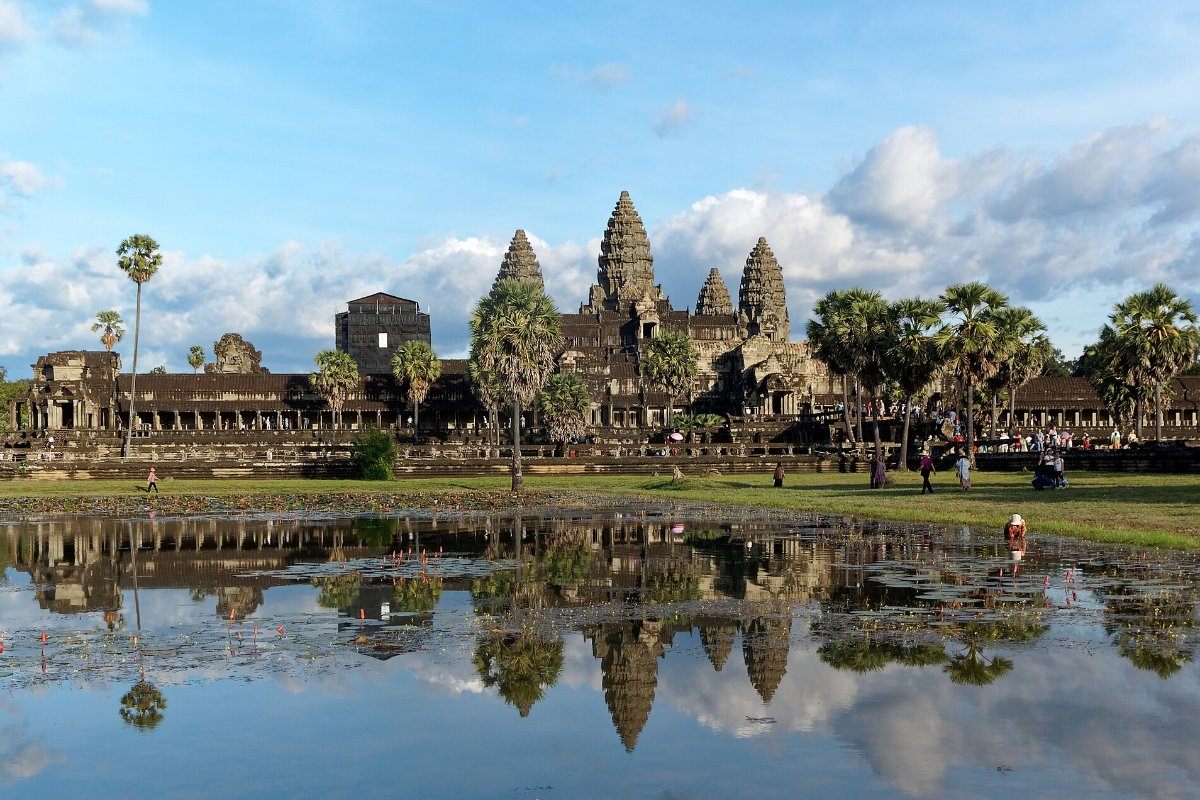
- Angkor Wat: the iconic temple with five lotus-bud towers, long carved galleries and reflecting pools.
- Angkor Thom and the Bayon: a walled royal city whose central temple, the Bayon, is famous for its giant smiling stone faces.
- Ta Prohm: the "jungle temple", where huge tree roots wrap around the walls.
- Banteay Srei: a small temple about 25 km away, known for its finely carved pink sandstone.
- Kbal Spean: carvings along a jungle riverbed, reached by a short forest walk.

How many days do you need at Angkor Wat?
Two full days are enough for the main temples at a comfortable pace. Three days let you add Banteay Srei, Kbal Spean and Tonle Sap Lake. Temple passes are sold for 1, 3 or 7 days at the official ticket office; your photo is printed on the pass, so you must buy it in person.

Sunrise at Angkor Wat: what to expect
Watching the sun rise behind Angkor Wat's towers is a highlight. Leave your hotel at about 5 am, bring a torch and find a spot by the north reflecting pool. Afterwards, explore the temple while it is still cool, before the tour groups arrive.

Tips for visiting Angkor Wat
- Dress code: shoulders and knees must be covered to enter the main temples.
- Beat the heat: start early, take a break at midday and return in the late afternoon.
- Getting around: a tuk-tuk is fun and breezy; a private car with air conditioning is more comfortable in the hot season.
- Guide: a good guide brings the carvings and history to life and knows how to avoid the crowds.
Beyond the temples
Take a boat to a floating or stilt village on Tonle Sap Lake, ride horses through the countryside or watch Phare, The Cambodian Circus, in the evening.

Combining Angkor with Vietnam
Direct flights link Siem Reap with Hanoi, Da Nang and Ho Chi Minh City, so Angkor is an easy addition to a Vietnam trip. You can also travel by speedboat along the Mekong from Chau Doc to Phnom Penh, then continue to Siem Reap.

Angkor passes and opening hours
A ticket is required for all temples in the Angkor Archaeological Park. Passes are available for one day, three days (valid within ten days) and seven days (valid within a month), and are sold at the official ticket center or online through the official Angkor Enterprise website. Your photo is printed on the pass, so keep it with you – it is checked at most temples. Most temples open early in the morning and close in the late afternoon, with Angkor Wat and Srah Srang opening earlier for sunrise and a few temples staying open for sunset. Check current prices and hours before you go, as they are updated from time to time.

Temples beyond the big three
- Preah Khan: a vast, partly ruined temple complex with long corridors and fewer visitors than Ta Prohm.
- Neak Pean: a temple on an island in a former reservoir, reached by a wooden walkway.
- Ta Som: a small temple with a strangler fig growing over its eastern gate.
- Pre Rup and East Mebon: pyramid-shaped temples of red brick and laterite, beautiful at sunset.
- Banteay Srei: about 35 km from Angkor Wat, with the finest carvings at Angkor.
- Beng Mealea: a jungle-covered ruin about an hour from Siem Reap, ideal for a half-day trip.

Dress code and etiquette
Angkor is still a sacred site. Cover your shoulders and knees, especially for the upper level of Angkor Wat, where visitors without suitable clothing may be turned away. Remove hats in shrines, do not climb on fragile structures and ask before photographing monks. Light, breathable clothing, a hat, sunscreen and comfortable shoes with good grip make long temple days much easier.

Tours that include Angkor
 Hoi An & Angkor Wat Tour: Vietnam & Cambodia in 7 Days7 days · Private tour · View itinerary →
 North Vietnam & Angkor Wat Tour: 9 Days Hanoi to Siem Reap9 days · Private tour · View itinerary →
 Angkor Wat to Halong Bay Tour: 9 Days9 days · Private tour · View itinerary →
 Phu Quoc to Angkor Wat Tour: 10 Days via the Mekong Delta10 days · Private tour · View itinerary →
 Angkor to Con Dao Tour: 10 Days via Phnom Penh & the Mekong Delta10 days · Private tour · View itinerary →
Frequently asked questions
Is one day enough for Angkor Wat?
One day covers Angkor Wat, the Bayon and Ta Prohm, but two days are much more relaxed.
When is the best time to visit Angkor?
November to February is dry and slightly cooler. March to May is very hot; the green season from June to October is quieter and lush.
Do I need a visa to visit Angkor Wat?
Most nationalities need a Cambodian visa, available as an e-visa or on arrival. See our visa guide for details.
How much does an Angkor pass cost?
Prices are set by the Angkor Enterprise and change occasionally; check the official website for the current price of the one-, three- and seven-day passes.
Can I visit Angkor without a guide?
Yes, but a good local guide explains the history and carvings and plans the day to avoid crowds and heat.
How do you get to Angkor Wat?
Fly to Siem Reap; direct flights run from Hanoi, Da Nang, Ho Chi Minh City and Bangkok. The temples are 15–20 minutes from town.
Plan your private trip with Entdecke Vietnam
Tell us your dates, interests and travel style, and our local team will suggest a private itinerary for you.
Request a quoteRelated guides
Cover photo: Jakub Hałun, CC BY-SA 4.0, via Wikimedia Commons.